
Once it’s in, there’s no way out.
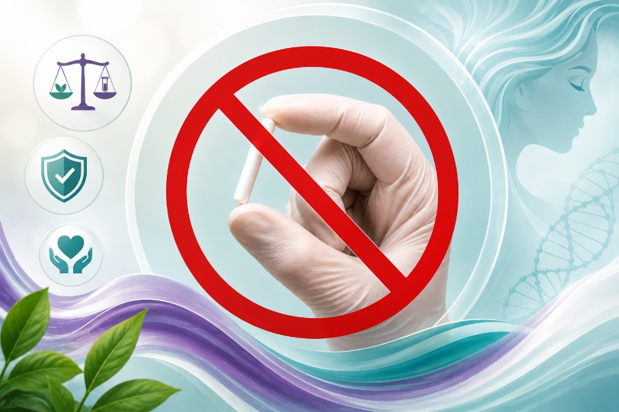
Imagine this: Three weeks ago, you had a hormone pellet placed under your skin. Today you’re in a hospital room hearing the words no one wants to hear — breast cancer. Or prostate cancer. Your oncologist’s first order: stop all hormones immediately. But you can’t. That pellet will keep releasing the very hormone your cancer feeds on for months — and no one can reliably get it out.
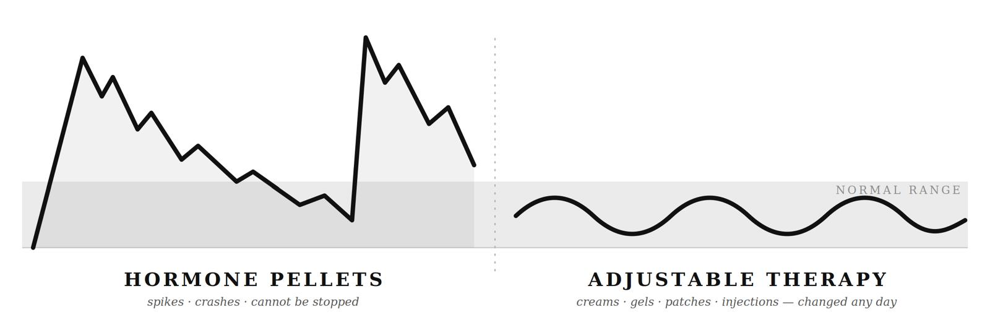
We prescribe hormone therapy every day — done right, it’s safe and life-changing. But pellets cannot be adjusted, stopped, or removed once placed. That one fact drives everything below.
- Any serious problem, same trap. Mood changes, palpitations, dangerous blood counts — whatever goes wrong, you ride it out for months. Every other method stops within days.
- Levels run dangerously high. Often several times above normal — in women, testosterone can hit typical male levels.
- More side effects. Abnormal bleeding, acne, unwanted hair, hair loss, weight gain, mood swings — at several times the rate of standard therapy.
- Blood thick enough to clot. Sustained high testosterone raises red blood cell counts — and with it, the risk of clots, stroke, and heart attack. No dose to lower.
- The crash-and-re-pellet trap. Feel great, crash early, re-implant on top of what’s left — doses climb higher every round.
- Surgery every few months. Forever. Infection, pellets pushing back out through the skin, scar tissue — and a bill with no endpoint.
The bottom line:
Good hormone care means control. Creams, gels, patches, and injections can all be adjusted or stopped the day something changes. Pellets take that control away — so we won’t put them in. Questions? Ask us at your next visit.
Educational content from Center for Internal Medicine and Preventive Care, SC (Shape the Wave Longevity Centers). Not a substitute for individualized medical advice.


